DESCRIPCIÓN
Diseñamos una plataforma propia que unificó CRM, propuestas y comisiones en un solo flujo operativo para MHT.
EMPRESA:
Magic Holiday Travel
CATEGORÍAS:
COMPARTIR


Magic Holiday Travel
Dos sistemas desconectados, un equipo llenando el vacío a mano, y la decisión de construir algo propio.
Introducción
Magic Holiday Travel (MHT) opera en un mercado donde la velocidad de respuesta y la precisión en la gestión comercial hacen la diferencia entre cerrar o perder una oportunidad. Como agencia de viajes con un equipo de agentes y un ciclo que va desde la captación del lead hasta el pago de la comisión, MHT necesita que cada parte de esa cadena funcione sin fricción. Hasta hace un tiempo, no funcionaba así.
El problema
MHT trabajaba con dos sistemas que no se comunicaban: un CRM contratado para gestionar leads y propuestas, y una plataforma separada para el cálculo y pago de comisiones. Cada herramienta hacía lo suyo, pero entre ellas había un vacío que el equipo llenaba con trabajo manual.
Los agentes cargaban la misma información en dos lugares. Las comisiones se calculaban sobre datos que no siempre estaban actualizados. No había manera de seguir un lead desde el primer contacto hasta la comisión pagada sin saltar entre sistemas y validar manualmente cada paso. Los líderes de equipo tampoco tenían visibilidad en tiempo real: para entender el rendimiento de su equipo, dependían de reportes que alguien tenía que armar.
El costo de esa fragmentación no era solo operativo. Cada error en una comisión es un problema de confianza. Cada dato desincronizado es una decisión tomada sobre información incompleta. En una agencia que depende del desempeño de su fuerza de ventas, esa opacidad tiene consecuencias concretas.
La solución
La respuesta no fue buscar un CRM más completo ni una plataforma de comisiones más sofisticada. Fue diseñar desde cero un sistema propio, construido alrededor del flujo real de trabajo de MHT.
Trabajamos junto al equipo para mapear ese flujo completo: cómo se captan los leads, cómo se construyen las propuestas de viaje, qué información necesita cada rol para hacer su trabajo y qué reglas determinan el cálculo de una comisión. A partir de eso, construimos una plataforma que integra todo ese ciclo en un solo lugar.
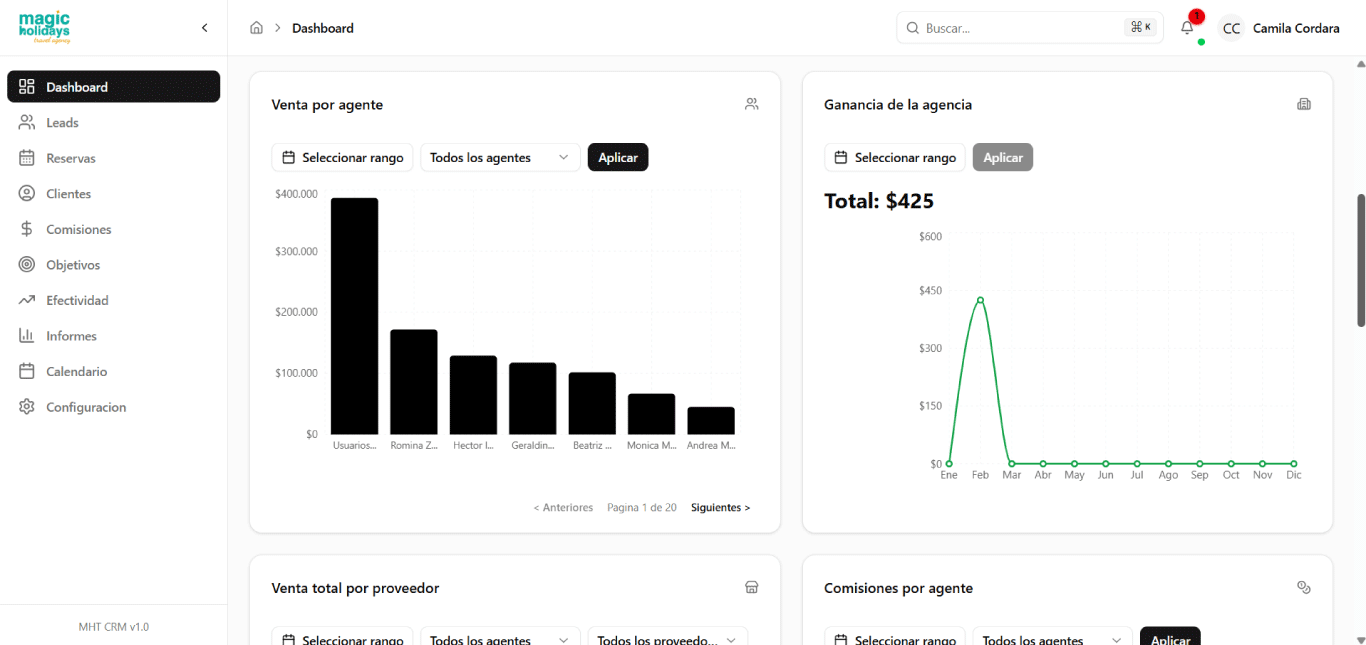
Los leads entran desde formularios externos directamente al sistema. Las propuestas se crean con una lógica específica para el rubro: fechas, proveedores, montos. Cuando una propuesta avanza, se convierte en reserva confirmada dentro de la misma plataforma; la comisión correspondiente se calcula automáticamente y queda asociada al agente y al período. Las metas comerciales son configurables por proveedor, por período y por agente.
El acceso es por rol: los agentes ven sus propios leads y propuestas, los team leaders tienen visibilidad sobre su equipo, los administradores configuran reglas y comisiones. La plataforma no centraliza decisiones humanas; organiza la información para que cada persona trabaje con lo que le corresponde.
Resultados
La unificación operativa tuvo efectos inmediatos en la dinámica del equipo:
Eliminación del retrabajo entre sistemas. Los agentes dejaron de cargar la misma información en dos lugares; todo el ciclo comercial ocurre dentro de una sola plataforma.
Reducción de errores en comisiones. Al calcular automáticamente sobre datos en tiempo real, desapareció la principal fuente de desincronización que generaba errores y fricciones internas.
Trazabilidad completa del ciclo comercial. Por primera vez, es posible seguir el recorrido de un lead desde el primer contacto hasta la comisión pagada sin saltar entre herramientas ni validar manualmente.
Visibilidad en tiempo real para líderes y administradores. El desempeño del equipo comercial está disponible en el momento en que ocurre, sin que nadie tenga que compilar esa información.
Mayor agilidad operativa para los agentes. Con menos fricción y sin duplicación de tareas, el foco vuelve a estar donde tiene que estar: en las oportunidades comerciales.
Base sólida para seguir creciendo. Las reglas de negocio, metas y criterios de comisión son configurables sin intervención técnica, lo que le da a MHT autonomía para adaptar la plataforma a medida que el negocio evoluciona.
Conclusión
MHT tenía las personas y el proceso; le faltaba la tecnología que los conectara. El trabajo no fue implementar herramientas: fue entender cómo funciona realmente una agencia de viajes y construir un sistema que responda a esa lógica. Eso es lo que diferencia una solución a medida de una herramienta genérica adaptada: no parte de lo que el software puede hacer, sino de lo que el negocio necesita.